

Land Acknowledgement
We recognize that Théâtre Cercle Molière is situated on the ancestral lands of the Anishinabee, Ininewak and Dakota peoples, as well as the homeland of the Métis Nation. We recognize that Manitoba is also home to the ancestral lands of the Anishininiwak and Dene. Stories have been told on these lands for millennia, and we would like to thank our ancestors, our grandmothers and grandfathers, for proudly transmitting to us the English language and the Michif language.

Vision
Bringing audiences together through inclusive French-language theatre in Manitoba, recognized for its artistic excellence, deep community roots and openness to the world.
Mission
Théâtre Cercle Molière is a century-old Francophone institution rooted in Manitoba. We create, produce, present and host theatrical works, supporting artists and fostering the cultural vitality and community life of Manitoba’s Francophone community.
Values

Excellence
Quality, rigour and ambition guide every aspect of our artistic and organizational work.

Inclusion
We cultivate an accessible space of belonging where everyone feels welcome.

Boldness
We embrace curiosity and exploration to evolve our practice and remain relevant.

Commitment
We bring our century-old legacy to life through active engagement with our community and Manitoba’s Francophone community.

Collaboration
We believe in the power of collective work, partnerships and dialogue to enrich artistic creation and strengthen our impact.


Our history
Founded in 1925, Théâtre Cercle Molière is the oldest active theatre company in Canada, French or English. Since its beginnings, it remains a driving force in the cultural life of French-speaking Manitoba.

1925: Foundation
Based in St. Boniface, in the heart of metropolitan Manitoba, Le Cercle Molière brings classical repertoire to rural Manitoba.

1940-1968: Direction by Pauline Boutal
Under the leadership of Pauline Boutal (1940-1968), the Cercle Molière distinguished itself several times at the Dominion Drama Festival.

1950s
Le Cercle Molière presents Quebec and Canadian theatre

1958
First tour of Western Canada.

1970
Le Cercle Molière becomes the first non-professional troupe to perform at the National Arts Centre.

1968-2012: Direction of Roland Mahé
Le Cercle Molière is transformed into a professional company, both in terms of the conditions offered to artists and the caliber of excellence pursued, and in terms of its production capabilities.

1968-2012
In this second phase, the Cercle Molière is focusing on Manitoba creation. It produces adaptations and translations of Canadian and foreign plays, presents numerous Quebec texts that resonate with Franco-Manitobans, and sets up several training and support programs for artists.

1986
The troupe presents its first season devoted entirely to Franco-Manitoban drama

2000
For its 75th anniversary, the Cercle Molière presents a second all-French-Manitoban artistic season.

2010
After ten years of planning and over $2 million in private-sector fundraising, the Cercle Molière team relocated to boulevard Provencher, St. Boniface's most important thoroughfare, in May 2010. The advent of a long-awaited, dedicated permanent venue enhances the troupe's technical capabilities, provides the administrative team with a bright, energizing environment and offers artists a stimulating, airy workplace.

2012 à 2026: Creative direction by Geneviève Pelletier
Geneviève Pelletier, Métis creator and director, was artistic and general director of Théâtre Cercle Molière from 2012 to 2026. She is interested in the crossroads of cultures and the multiple possibilities opening up in this world that is becoming smaller and smaller, producing fertile and complex spaces for creation.

2016
The Cercle Molière changes its name to Théâtre Cercle Molière.

2024
Over the years, close to 70 plays by Franco-Manitoban authors have been presented on the Théâtre Cercle Molière stage. The company continues to seek out new voices from our community.

October 4, 2025
Symbolizing the vitality of the institution and the communities in which it evolves, the MCT will celebrate its centenary on October 4, 2025 at the Canadian Museum for Human Rights.

2026 to present: artistic direction by Marie-Ève Fontaine
Marie-Ève Fontaine, an artist and theatre director, has served as Artistic Director and Co-Executive Director of Théâtre Cercle Molière since 2025.
Artistic Direction
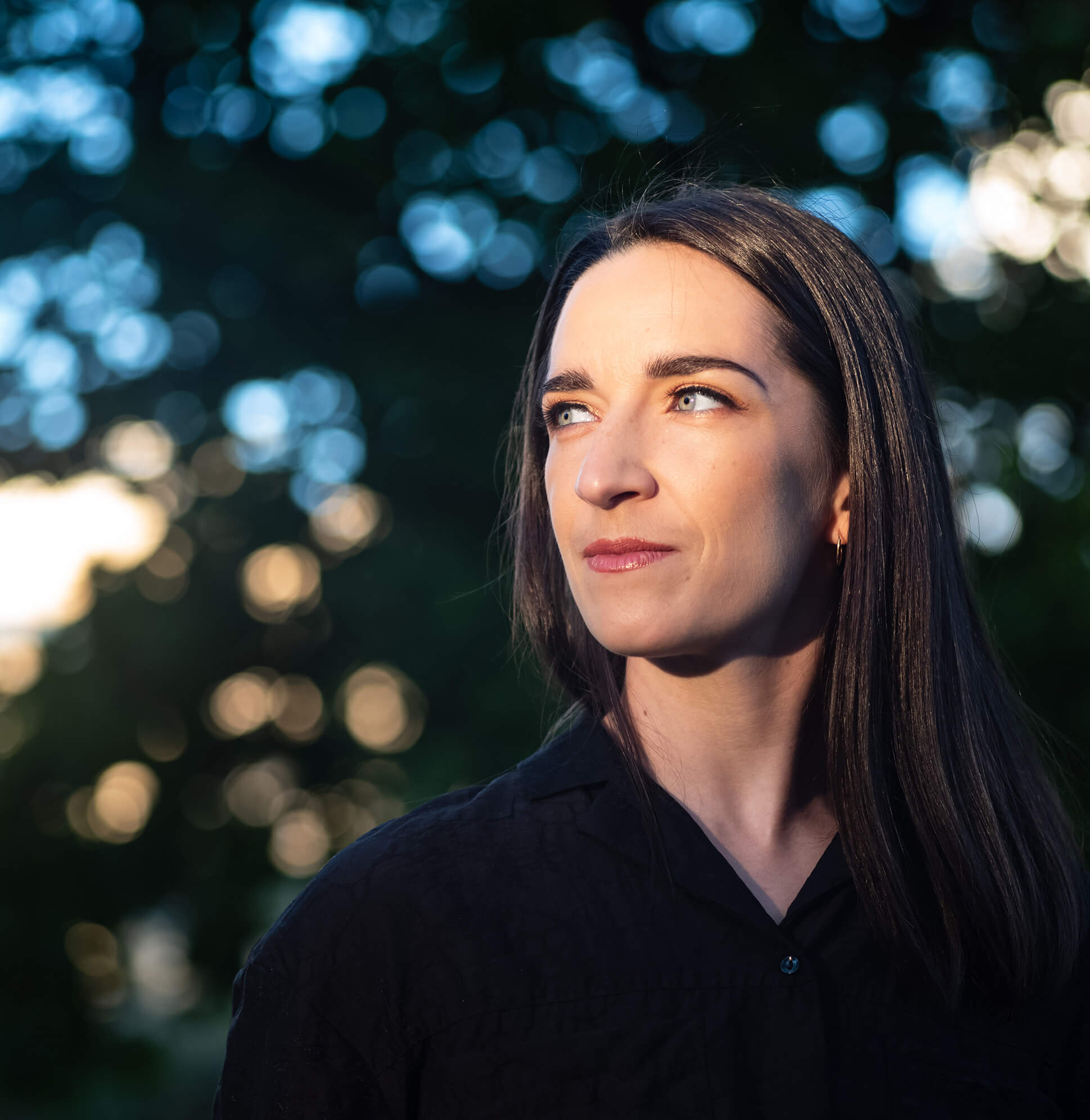
Marie-Ève Fontaine
Geneviève Pelletier is a Métis performer and director from Winnipeg. Since 2012, she has been the Artistic Director of the Théâtre Cercle Molière. She is interested in the intermingling/interweaving of cultures and the myriad of possibilities that are opening up in a world that is getting smaller all the time, giving rise to complex and fertile spaces for creation. Issues of important demographic change within communities, the changing face of the Francophone and Métis communities are now reference points for a theatre company that is continually searching for renewal and relevance.La fuite de l’hippocampe, une production des Vagabondes et de VOX Théâtre (2024) ainsi que de Giant Mine en coproduction avec le Théâtre du Nouvel-Ontario (2026). Depuis 2025, elle assure la direction artistique et la codirection générale du Théâtre Cercle Molière à Winnipeg.
Where we are
A renewal of the performing arts

National and international collaborations
TCM is collaborating with theatre companies in Canada and abroad. Offering recent masterpieces such as Un. Deux. Trois (2022), alterIndiens (2024) and L'Amour telle une cathédrale ensevelie (2024).

Pushing the limits
We present daring plays that challenge convention and provoke thought. By pushing the traditional boundaries of the performing arts, it invites its audiences to step out of their comfort zones and explore new perspectives.

Unforgettable experiences
From dialogue and lighting to sound and scenery, TCM ensures that each play is a unique experience for the audience.
Increasingly diverse programming

HYPERART
For Nuit Blanche and under the direction of Franco-Manitoban artist Rayannah, Théâtre Cercle Molière is collaborating with the Centre culturel franco-manitobain on the HYPERART project.

Black and Proud
This initiative takes place during Black History Month, an opportunity to educate, raise awareness and come together to celebrate Black communities across Canada.
The 100th
TCM will celebrate its centenary in the 2025-2026 season. Many unique events are in preparation to mark its extraordinary longevity.
Eco-responsible accreditation

This accreditation is aimed at performing arts professionals wishing to undertake a sustainable development approach (environmental, social and economic pillars). The process is user-friendly, adapted to the fast-paced world of the cultural sector. It helps to structure the integration of sustainable development and provokes crucial reflection, opening the door to new perspectives and management methods, while fostering a sense of belonging for existing teams. In this way, the sector mobilizes through sharing best practices and forging strong links with the community.